Guide
Planning your yard lighting
A short, honest guide to laying out solar garden lights — no wiring, no inflated promises, just what works.
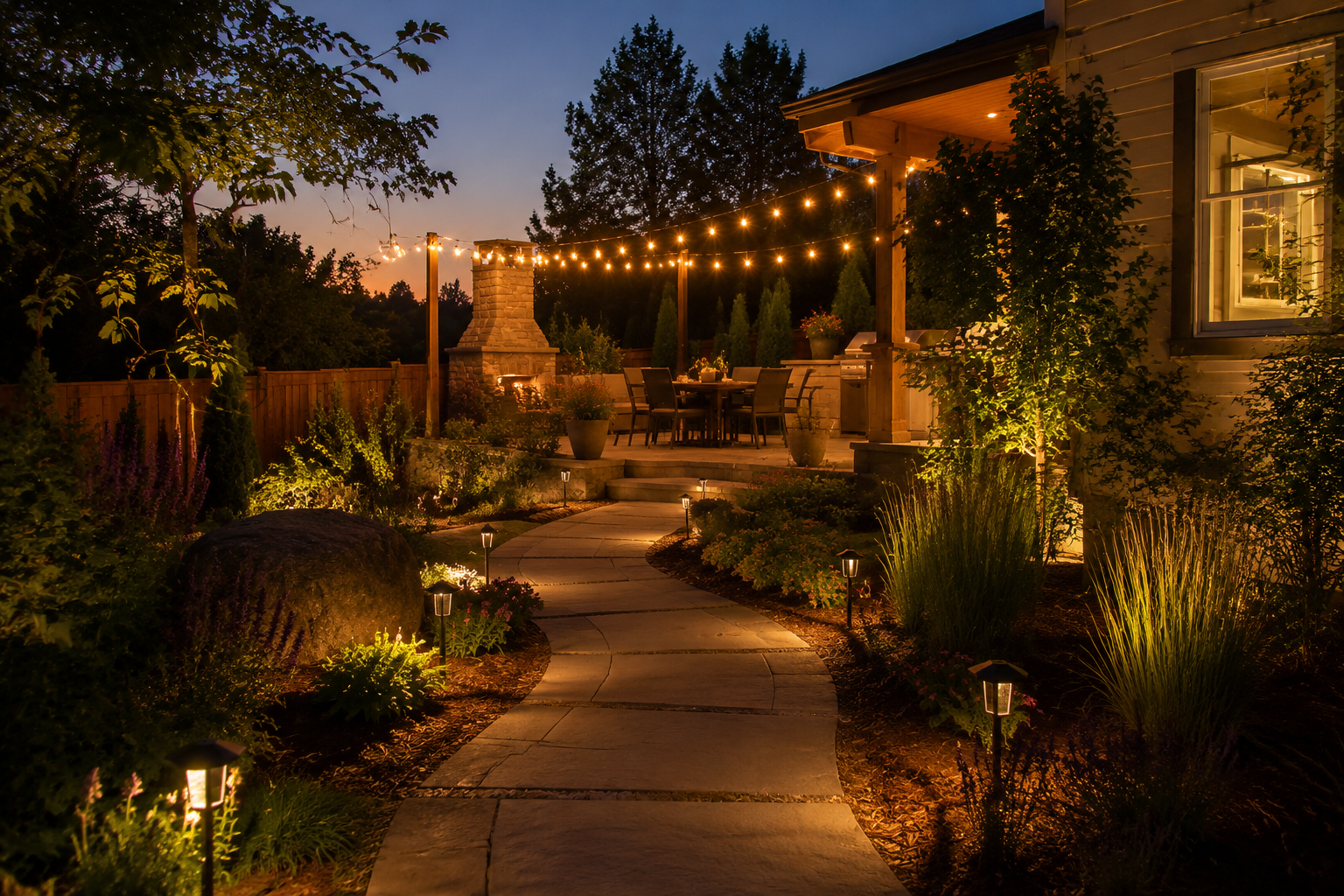
1. Map the moments, not the whole yard
Start with the places people actually move through after dark — the path to the door, the steps, the patio table. Lighting those well does more than scattering lights everywhere.
2. Put panels where the sun lands
Solar lights charge best with several hours of direct sun. Lights with detached panels (like our string lights) let you place the panel in the open and run the glow into shadier corners.
3. Layer heights for depth
Combine low step and pathway lights with taller bollards or hanging lanterns. A mix of heights gives a garden a calm, layered feel instead of a flat line of dots.
4. Mind the weather rating
Check each product's IP rating against where it will live. A splash-resistant IP44 light is fine under an eave; near sprinklers or open ground, look for IP65 or higher.
Match lights to the setting
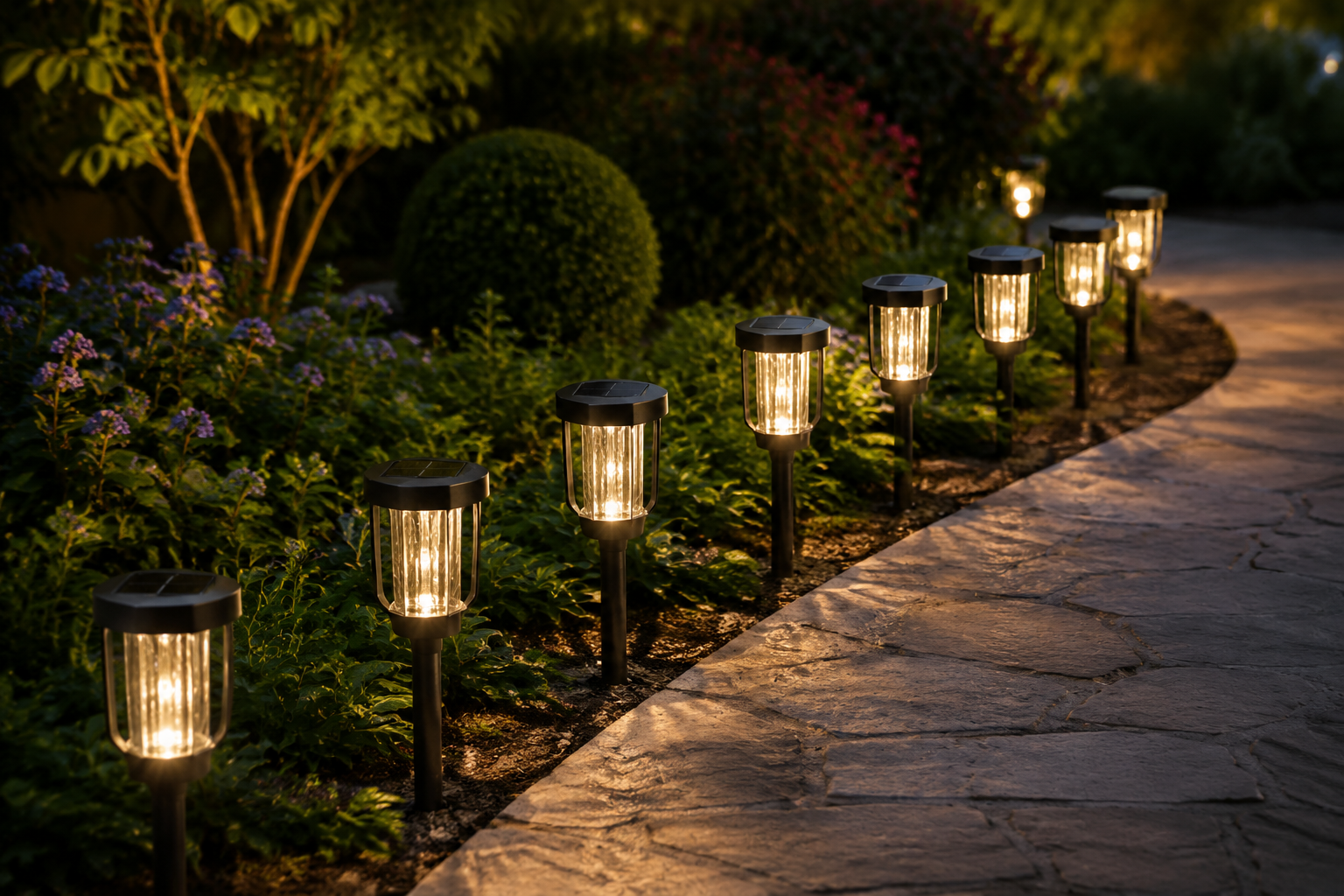
Pathway & Spotlights
Define walkways, beds, and focal points with directed warm light.
4 products →
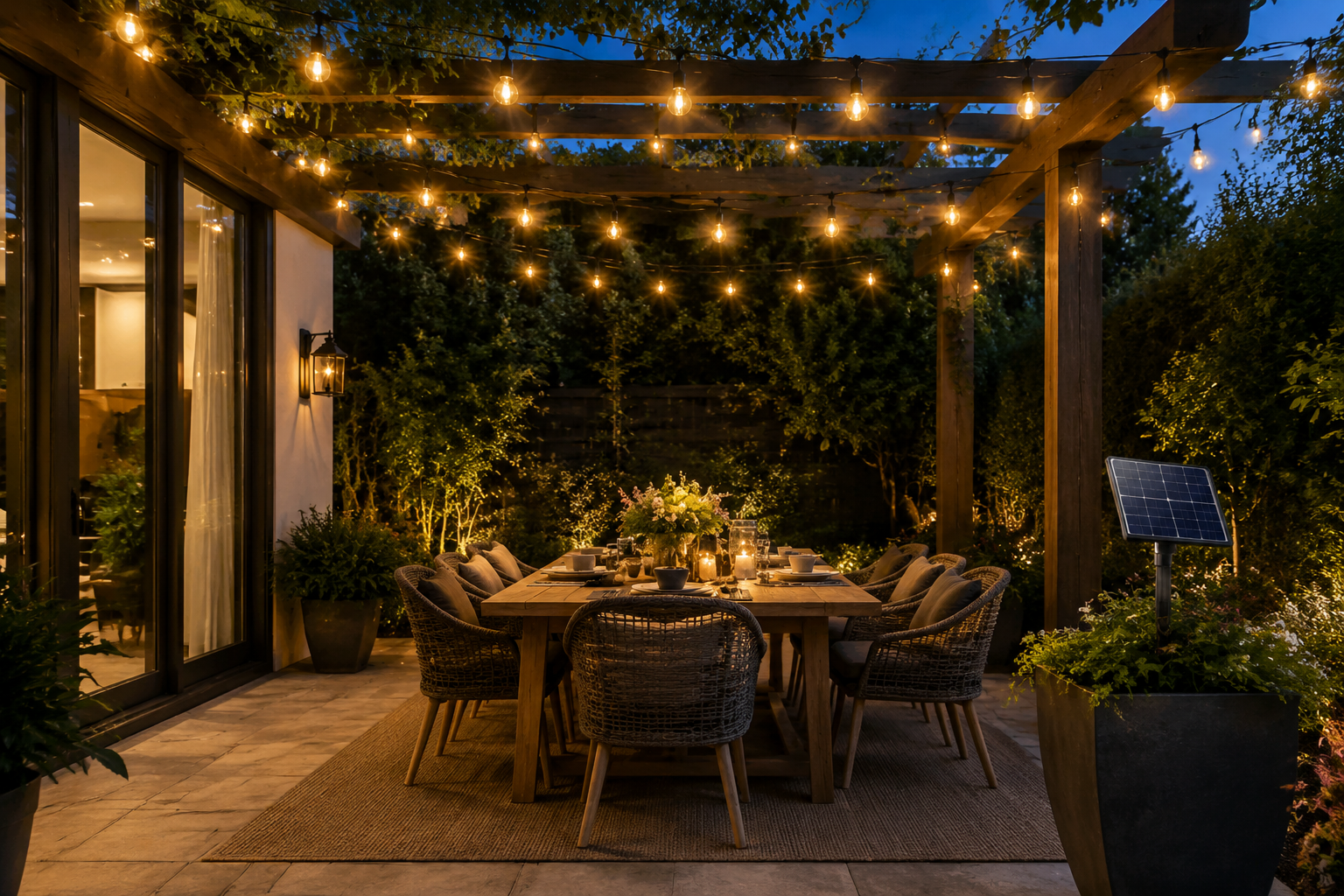
String & Hanging
Drape patios, pergolas, and trees in an ambient evening glow.
4 products →
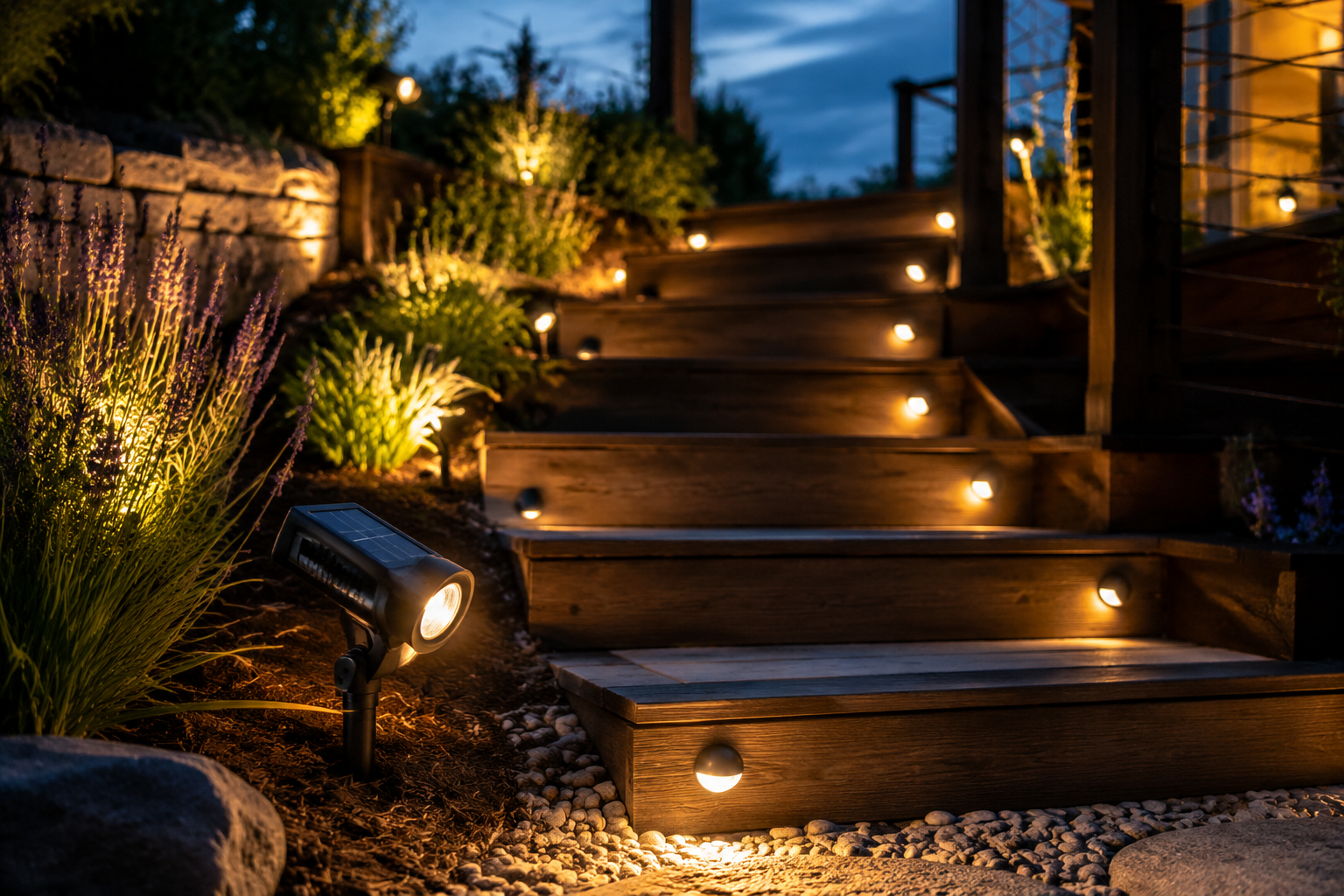
Accents & Décor
Caps, steps, stakes, and water features that catch the dusk.
6 products →
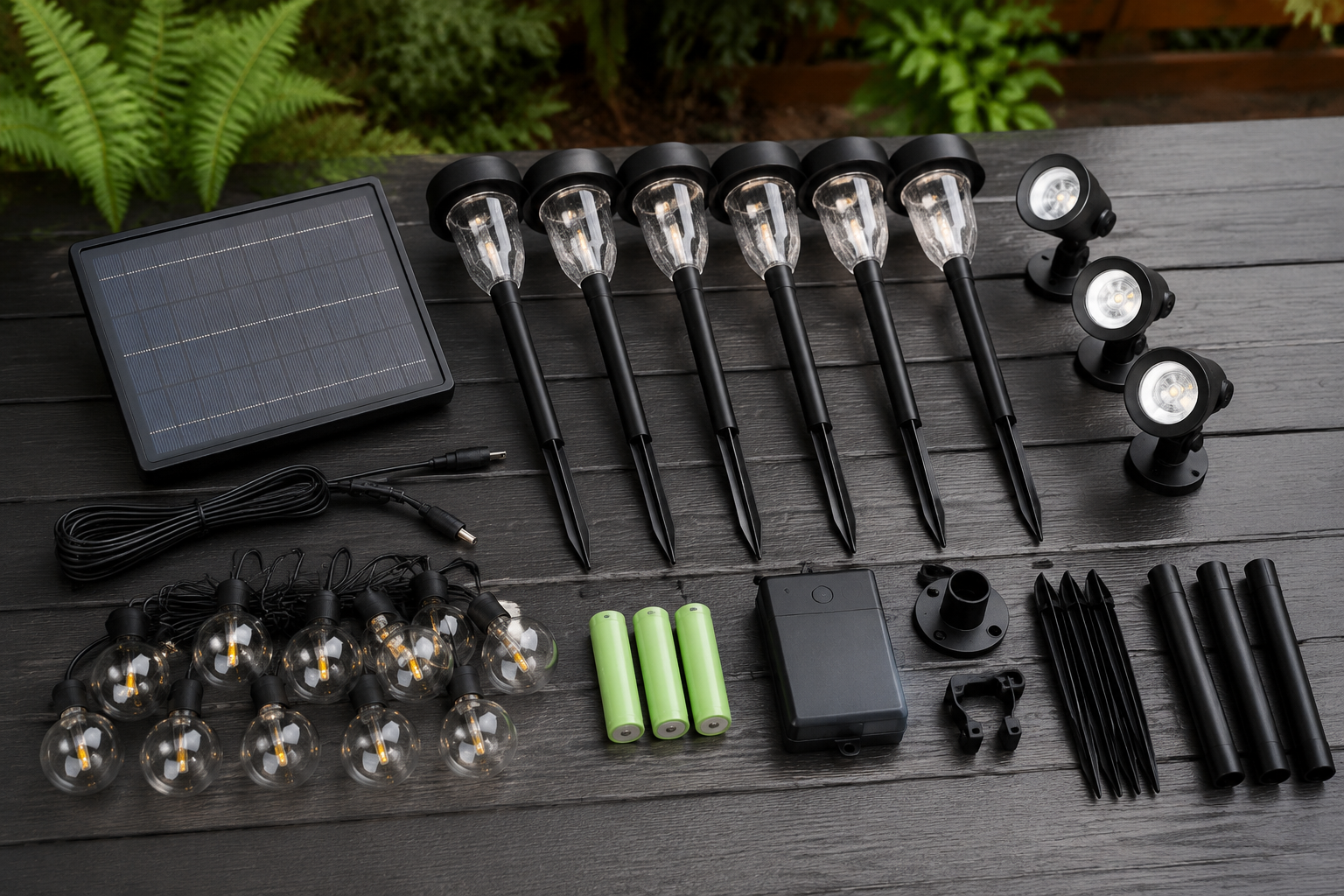
Bundles & Power
Curated sets plus replacement rechargeable batteries.
2 products →
Understanding IP weather ratings
| Rating | What it means |
|---|---|
| IP44 | Protected against splashing water from any direction. Good for covered or sheltered spots. |
| IP54 | Limited dust ingress and splashing water. Suitable for general exterior walls. |
| IP65 | Dust-tight and protected against low-pressure water jets. Good for open ground and rain. |
| IP67 | Protected against temporary immersion. Used for our floating pond lights (surface use). |
Ratings describe tested resistance, not a guarantee against all conditions. No outdoor light is fully waterproof or storm-proof.
Battery care
- Solar and low-voltage battery products only — we do not sell hardwired 110V/220V electrical devices.
- We do not guarantee runtime, brightness hours, energy savings, or electricity-bill reductions. Light output depends on available sunlight and conditions.
- Weather resistance is stated objectively by IP rating; no claim of full waterproofing or storm-proofing.
- Rechargeable batteries must be handled and stored safely per the included instructions.
- When lights dim after a season or two, try a fresh rechargeable cell before replacing the whole fixture — see our Replacement Solar Batteries.